
SEO for Coaches: How I Get Clients Without Social Media
I spent years on social media: taking selfies, running ads, and hating every minute of it. Whenever I stopped posting (or paying) the clients stopped coming.
Then I discovered a more passive, predictable way to get clients—SEO—and used it to generate over $1M in sales. It worked so well that I quit social media altogether.
In this comprehensive guide to SEO for coaches, I’ll show you exactly how I did it (and how you can do the same).
You’ll Learn:
Before we dive in, click the button below to get my SEO Blog Post Checklist. It's a simple 2 page Google Doc that will help you implement what you learn:
How One Blog Post Changed My Business Forever
For the first 5 years of my business, I slaved away on my MacBook, writing article after article, praying that clients would read them and hire me.
I’d pour my heart out, hit publish, and hear crickets.
Meanwhile, I used social media to get clients. I posted on Instagram, joined Facebook groups to DM strangers, and spent thousands of dollars on ads.
It nearly killed me. Facebook was like a Dementor, sucking the soul out of my body and the money out of my bank account.
At 5pm, I’d walk out of Azkaban (my home office) to have dinner with my wife. She'd ask me about work and I’d just stare blankly off into space.
One day, something odd happened: I started getting all this traffic to my site. It took me a second to figure out what had happened.
A post I had written was ranking #1 on Google for the term "coaching niches."
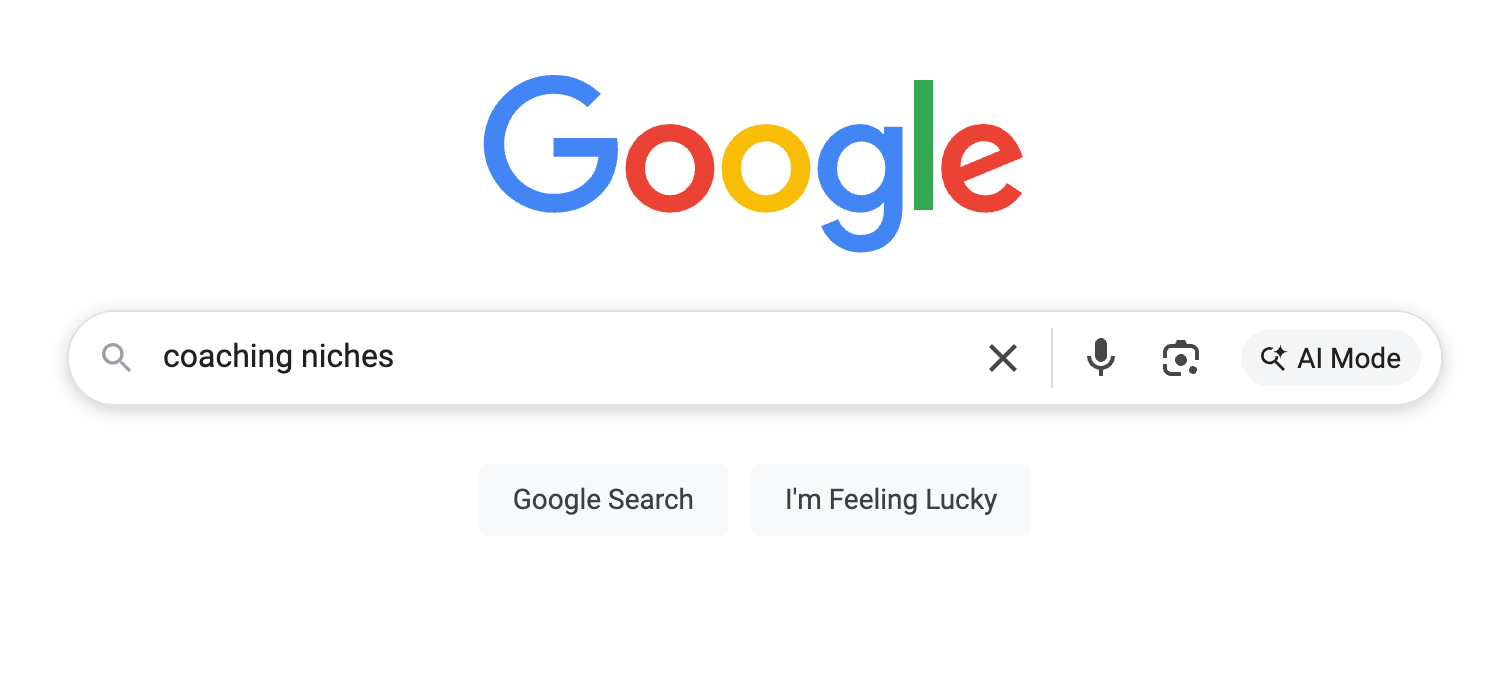
More and more coaching applications started popping into my inbox each week. I even got a speaking gig. All from one post.
That’s when I learned about keyword research and realized I had been going about blogging all wrong. Instead of writing random articles and hoping people would find them, I should have figured out what people were searching for in advance. I should have been using SEO.
Unfortunately, no one was teaching SEO for coaches. You basically had to have a PhD in computer science to understand how it worked. And even if you did get a blog post to rank, you still needed to know how to turn that traffic into consults.
But there was no turning back. I wanted to grow my audience so that I could move from 1-1 coaching to group programs and courses. I didn’t want to just get lucky once. I wanted something I could replicate.
So I started to simplify what I was learning into a system. I created a checklist for myself to go through for each blog post. Then, I created a page on my website that turned readers into coaching clients.
Since writing the “coaching niches” article, I’ve been able to rank on Google for 1,817 organic keywords.
For example, Google “coaching websites” and you’ll find my article:

Or Google “life coaching packages and pricing” and there I am:

These are just two examples of posts that drive traffic to my site.
What started out as a happy accident became my primary form of marketing. I was no longer dependent on social media to get clients.
So, in 2020, I quit social media. It terrified me to delete my accounts and go all in on SEO. And my revenue did go down a little bit while I transitioned. But the next year, I made more than I ever had in my business.
There was another thing that changed after I deleted social media: my energy. Instead of zombie meals with my wife, I started making fresh corn tortillas. And I slept like a baby knowing that I wasn’t contributing to the madness of social media.
I’ve now been in business for over a decade.
If I could go back and tell my past self one thing, it would be this:
Your Future Clients Are Searching For You Right Now
At this point, you might have a couple of questions. Let’s start with the basics.
“What Is SEO?”
SEO stands for Search Engine Optimization. It's about making your site show up in search engines like Google. For example, you could show up when someone types in “How to find a business coach” or “Lose 10 pounds in 60 days.”
A lot of people think SEO is super technical. Or that it's about stuffing your website with certain terms. But here’s the truth:
SEO is about being helpful.
Google’s job is to connect its users with the most relevant, trustworthy content possible. It's a matchmaker for problems and solutions. So when you create content that helps your ideal client—and structure it in a way Google likes—you're rewarded with free traffic. Sometimes for years.
Social media is like a job: you only get paid clients if you keep posting. Ads are like a loan: you borrow attention, and pay interest on it daily. SEO is like investing: the returns are slower at first, but compound over time. You get to focus on coaching and living your life.
SEO builds authority. If someone finds you through a short Instagram Reel or a Facebook ad, it's hard to build trust. But when they search for a solution and find your in-depth blog post, they're much more likely to convert.
Even if someone doesn't become a client, your content still helps them. Your marketing becomes calm and generous instead of reactive and pushy.
“Will SEO Work For Me?”
That depends.
SEO relies on you sharing your expertise. You can't just be a generalist life coach for anyone who wants to "get unstuck." You can't just ask powerful coaching questions. You have to provide answers.
SEO requires regular content. Traditionally, that means writing. Even if you focus on YouTube, or use AI as a creative partner (more on that later) you still need to know how to structure your ideas. Remember: you're competing against everyone else on the internet. So if you hate breaking down topics in a compelling way, SEO won't be the best strategy for you.
The good news? You don't need to post content every day or be a tech genius. You just have to be able to learn and follow a few key steps. If you want a simple checklist with my system, you can read the overview below or I can email it to you.
My 3-Step SEO System: Research, Write, Rank
I recommend publishing one new SEO blog post a month. That may not seem like a lot, but each post takes a fair bit of work.
Step 1: Research
The goal of keyword research is to learn what your ideal clients are already searching for. That way, you can choose the right topic. If you get this right, it's like an insurance policy on all the work you're about to do.
A keyword is a word or phrase someone types into Google. "Short tail" keywords are generally 1–3 words (like "business coach"). "Long tail" keywords are longer phrases (like "how to get coaching clients"). I generally focus on long tail keywords since they're more specific and easier to rank for.
One of the best ways to find keywords when you’re getting started is to look for competitors who are already using SEO and figure out what they rank for. Then you want to identify keywords with a high search volume, and low difficulty.
There are several tools you can use for keyword research:
Google keyword planner (free but designed for paid ads)
Ubersuggest (free version)
Ahrefs (paid)
AI tools like ChatGPT (free/paid)
Plain old Google searches to understand what’s already ranking
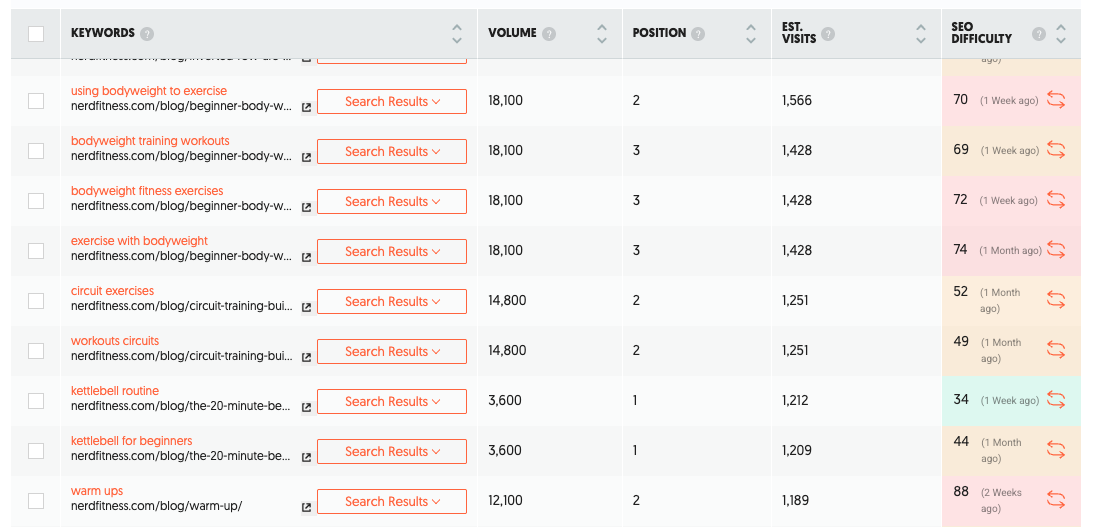
For example, if I’m a fitness coach I might search a competitor in Ubersuggest:
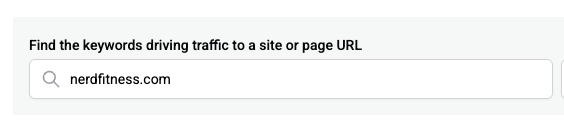
And I’d see all of the keywords it was ranking for. “Kettlebell routine” has a monthly search volume of 3,600 but only a 34 in difficulty. So that might be a good topic to start out with.
As you use these tools, ask yourself: What are your ideal clients — and only your ideal clients — searching for? Why are they searching for it (what's their "search intent")? And finally, how closely tied is this topic to what you actually help with?
You can also rank for sales pages. For example, my friend Scott Barlow runs a career coaching website called Happen To Your Career. They currently rank #1 on Google for the phrase “career change course.” It’s a perfect match between what his ideal clients are searching for and what the business gets paid to deliver.
Step 2: Write
Okay, now we know what we're writing about. The next step is to create content our potential clients will love. Otherwise it will never rank.
I like to start this process with an outline. First, I figure out how to structure the content—is it a list, a how-to post, a case study? I get a sense of what format would be best by looking at the first page of Google and seeing what types of articles are ranking.
Then I use a proven template to outline the post. For example, if I’m writing a How-To post, I use the 4MAT model by Bernice McCarthy:
Why - start by sharing why this topic is relevant
What - break down the idea, define it, etc.
How - give step by step instructions
What if - answer FAQs and give a call to action
Once you've got your outline, it's time to write your post. There's no set length requirement for an SEO post - it depends on the topic. Most of the time, it takes 1,500–2,500 words. I try to use humor, stories, and frameworks to write the ultimate guide on a topic as I understand it.
Finally, I pay special attention to the headline and introduction. If no one gets past the start of the article, it doesn't matter how good the rest of it is. The key is to build curiosity by opening a loop in your reader's mind. I also break the post up into sections with sub-headlines and images to make it more readable. I use large font (around 18px) and reasonable margins.
Step 3: Rank
Now that you've created the best article you can, it's time to make sure that your potential clients find it. There are a few things we can do to make this more likely.
First, there's technical SEO. You want to make sure that your website is fast and mobile friendly. Unnecessary plugins or large image files slow down your site.
Second, there's on-page SEO. Make sure your main keyword is in your headline and intro. Include related keywords throughout the article (don't go crazy with this, make it natural).
Finally, there's off-page SEO. This is everything you do to promote your post off of your website. For example, doing guest podcasts where people link back to your article. If I mention other sites in my article, I’ll email those people and try to get them to share it.
You can track your rankings and traffic over time to see how your articles are performing. Which brings us to an important question: how long does SEO take to work?
The honest answer is at least 3–6 months.
The good news is that once your articles start ranking, maintaining that ranking takes less work than the daily grind of social media. It's sort of like working out—it's hard to get in shape but easy to stay in shape.
How To Turn Readers Into Clients
If you follow my three-step system above, you'll eventually start getting traffic to your website. Now it's time to turn that traffic into clients.
The most direct way to do this is to include a call to action in your articles for people to book a call with you. You can say something like, "If this article was helpful for you, and you want to implement what you've learned, book a call with me here." Then link them to an online calendar or application page.
With enough traffic, some percentage of people will book a call. But what about everyone else? They leave your website and forget you exist. That's why I prefer a lead magnet as the main CTA. That way, even if they don't book a call, you have a way to follow up with them.
This lead magnet should feel like a quick, easy win. For example, my highest converting lead magnet ever was a Google Doc template of my coaching contract.
Once they download the lead magnet, add them to your email list and offer them a free consult on the thank you page. If they skip the free consult, you can follow up with weekly newsletters. The right people will book when they’re ready.
I describe the full system in this video:
AI & The Future of SEO
With the rise of AI search results and tools like ChatGPT, you might wonder:
Does anyone even click Google links anymore? Is SEO dying?
To answer this question, let's look at the data.
In the last year, I’ve seen an increase in both impressions and clicks from Google.
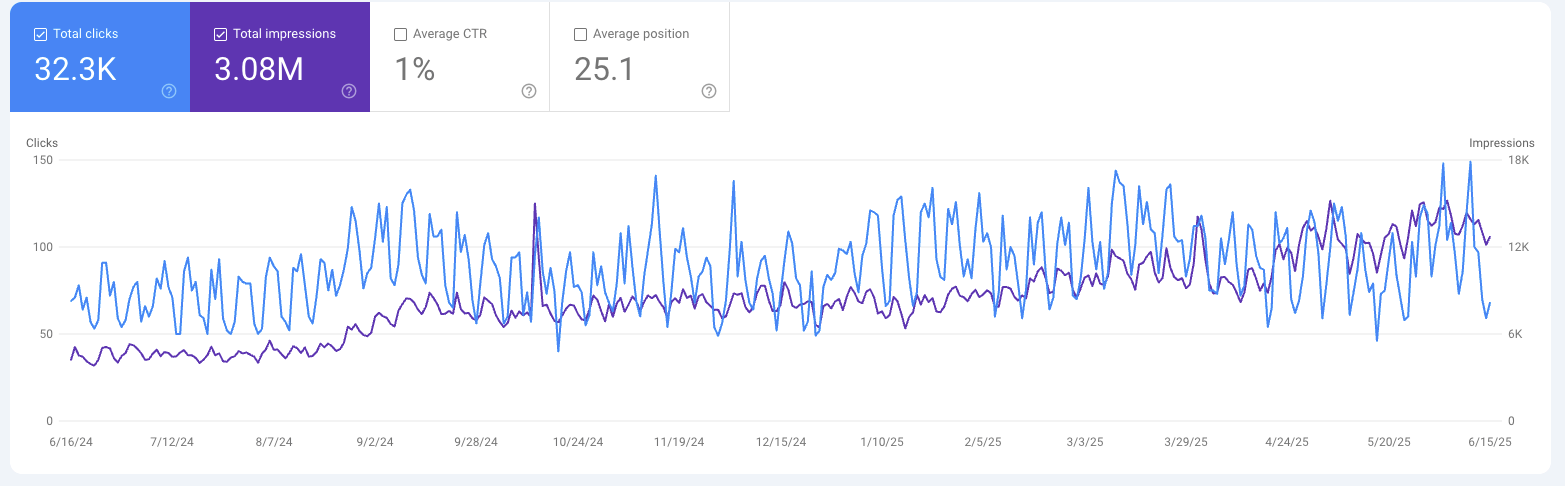
In the last year, I’ve gotten a steady flow of of 5 coaching applications a month.
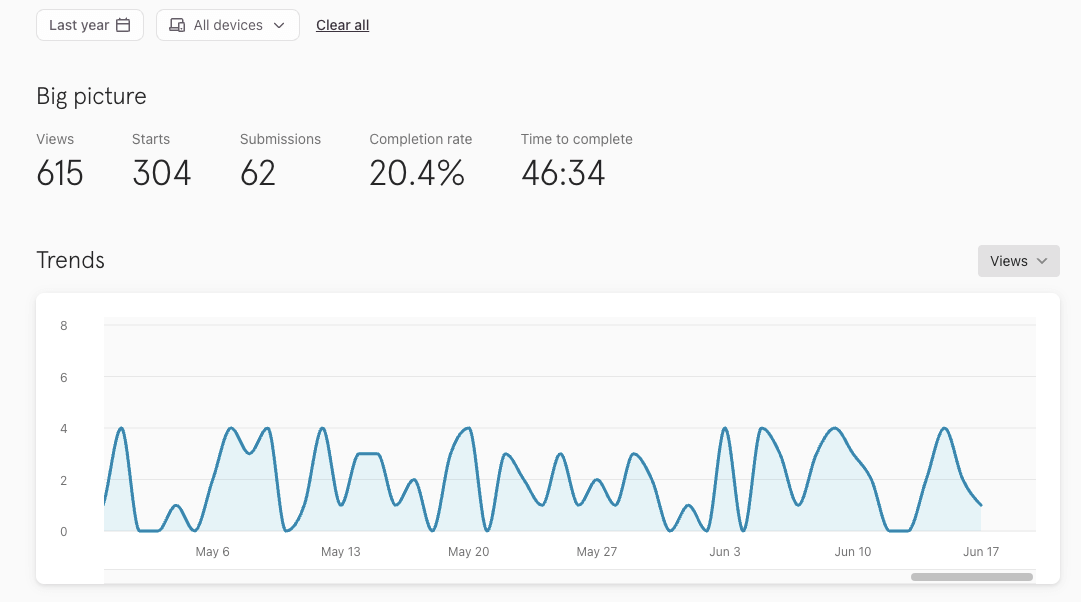
I recently attended an industry-leading SEO event to find out how large companies and agencies are thinking about AI. And here was my takeaway:
SEO isn't dying. But it is changing. Google isn't the only game in town anymore. People are searching in lots of different places, including YouTube, and you need to optimize for AI mentions as well.
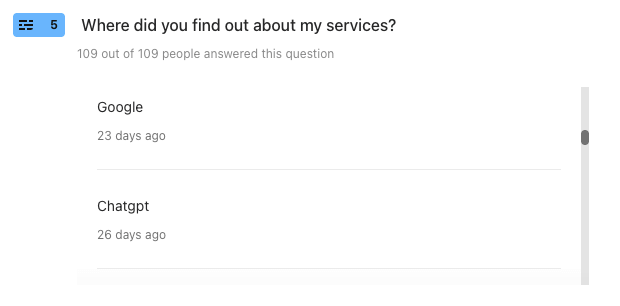
Interestingly, AI uses many of the same signals as Google to make recommendations (quality content, backlinks, etc.). So good SEO is good GEO (Generative Engine Optimization). This is probably why people have started finding me through ChatGPT as well as Google:
What about on the creation side? AI allows you to brainstorm topics, find keywords, and write content. This means that SEO is easier than ever. It’s also more competitive.
The way to stand out is to focus on what Google calls E-E-A-T (Experience, Expertise, Authoritativeness, Trustworthiness). Avoid writing a general guide that anyone, including ChatGPT, could create. You have an edge when you share personal stories, client examples, and new insights. Like I do in this article.
Treat AI like your creative assistant, not as a replacement for original thinking.
Here’s an interview I did where I dive deep into how I’m getting clients with GEO:
What I’d Do If I Started Over
If I had to start all over again—no audience, no traffic, no social media—I’d skip the social media hamster wheel and go straight to SEO.
Here’s exactly what I’d do:
Pick a niche I had deep experience in, ideally one I’d helped others with.
Use keyword research to find 5–10 topics my clients are searching for.
Write one great blog post per month using the 3-step system I shared above.
Create a lead magnet for each post that turns readers into email subscribers.
Send one helpful newsletter each week with tips, stories, and invites to apply.
That’s it. No algorithms to please. No pressure to be online. Just a quiet, calm business that grows in the background while you coach.
If this all feels like a lot, don’t worry. You only need to learn one part at a time. I’ve put my full system in a simplified Google Doc checklist for you here:
