
If there’s one thing I’ve learned over my 12+ years as a business coach, it’s this:
Businesses are run by humans. And humans are run by their personal desires, fears, and protective strategies.
As a result, advice that works for one entrepreneur is often counterproductive for another entrepreneur.
That’s where the Enneagram comes in.
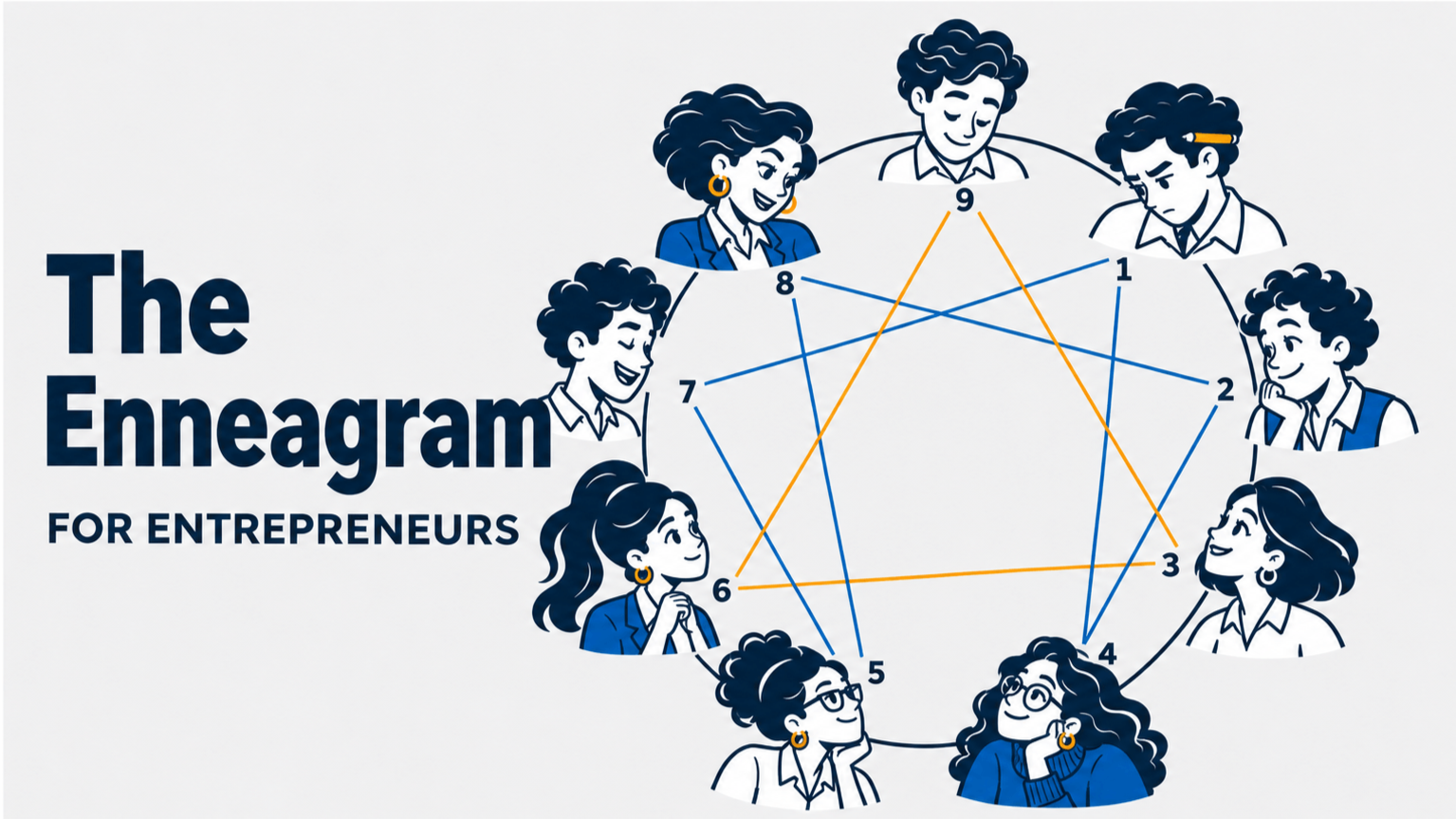
The Enneagram is a system of 9 interconnected personality types.
Knowing your type allows you to personalize the world of entrepreneurship and learn where you get stuck.
How to Figure Out Your Enneagram Type
If you're new to the Enneagram, the first step is to learn your type.
You may resonate with aspects from each type, but it’s important to figure out which type you lead with.
Step 1: Take the QUEST
Start with the Quick Enneagram Sorting Test (QUEST), developed by Don Richard Riso and Russ Hudson.
It uses just 2 questions to help you narrow down your type.
Treat your result as a starting point. Enneagram tests are notoriously unreliable. In fact, the system as a whole is often criticized for not being “evidence based.”
But bear with me, because it's the most useful personal growth tool I've come across. And I've tried them all: Myers Briggs, Big Five, CliftonStrengths, Human Design, Positive Intelligence*, and more.
*Note: Many people believe that the creator of Positive Intelligence, Shirzad Chamine, repackaged the Enneagram to create his “Saboteurs” without giving credit. But that’s a discussion for another time.
Step 2: Read the type descriptions
My type descriptions below are adapted from The Enneagram Institute and The Narrative Enneagram. If you feel torn between types, focus on the core fear and desire of each type, rather than their common behaviors.
For example, my wife thought she was a Type 2 at first. In our society, women are encouraged to put others first, and caretaking behaviors are characteristic of Type 2. But behavior alone doesn’t tell you what motivates someone. My wife actually leads with Type 1.
Once you have an idea of your type, you’re ready to go deeper.
The 9 Enneagram Types As Entrepreneurs
While I've attended multiple trainings on the Enneagram, I don't consider myself an expert. The following is simply what I’ve observed in my work as a business coach.
To prepare this article, I reviewed 45 client intake forms from 2021–2026. This data shed light on how different Enneagram describe their challenges and goals.
Type 1: The Reformer
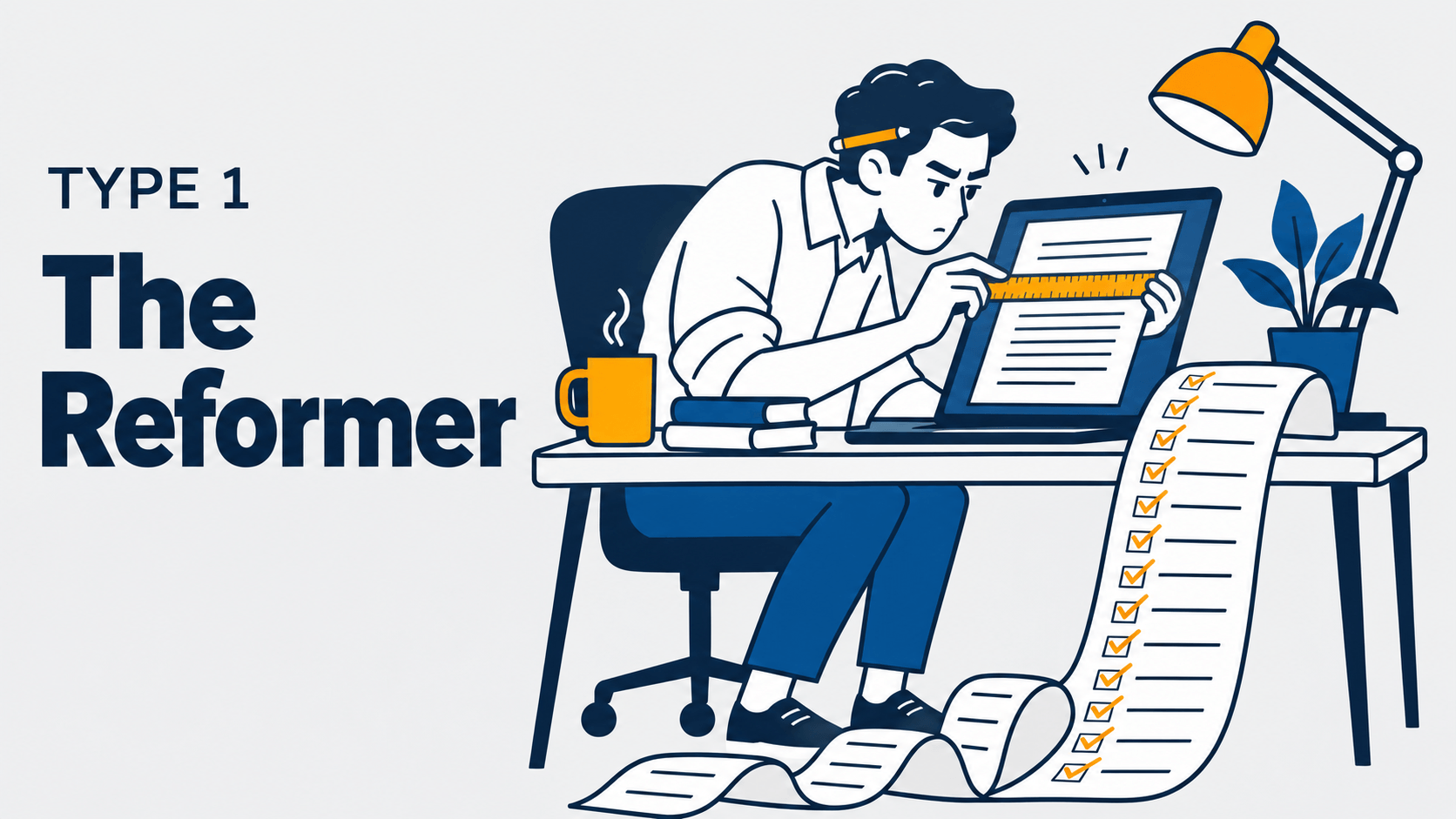
You might lead with Type 1 if: You ask for feedback on your sales page, spot a typo in the feedback, and start to question whether this is really someone you want feedback from.
Motivation: To be good and to do what’s right.
Fear: Of being bad or corrupt.
Where they get stuck in business: If there’s something you need done properly, give it to a One. They will take care of it. In a business context, this builds a a lot of trust with clients. But their high standards can backfire in a few ways:
It can be challenging to delegate and let others do things their way. What Ones see as a helpful suggestion may be interpreted as a judgmental critique. When other people don’t meet their standards, frustration can give way to self-righteous anger: “If everyone would just do their job, I could finally relax.”
Ones feel secure with guidelines, formal roles, and accountability. With no boss to tell them they are doing a good job, Ones start to doubt themselves. They simultaneously crave feedback, fear criticism, and are secretly convinced that they know best. This is a challenging combination for entrepreneurship.
Their mind is always running with tasks to complete and things to do better. They have a loud inner critic, which can lead to burnout if it’s not tempered. Ones love to organize things, and can go a bit overboard making them just right. I had a client who was constantly improving her KPI dashboard. Eventually I had to say, “Your dashboard is fine, now go make money.”
How to grow your business as a Type 1:
Remember that your personal preferences are personal - they’re not universally agreed upon. When you feel convinced that you are surrounded by idiots, it’s hard to be cooperative. Before delegating, agree on the outcome, deadline, and essential standards. For everything else, ask yourself: “How important is this? Do I really want to die on this hill?”
Give yourself permission to relax. Believe it or not, the fate of the world does not rest solely on your shoulders. One of my mentors said, “When you see a One give a big belly laugh, that’s a good sign.” It may feel hard to rest at first, but your business and soul require it.
Focus on progress over perfection. Learn to recognize good enough, especially in administrative tasks, so that you can put your time and attention into things that grow the business: marketing, sales, and client retention. A coach can help you prioritize, provide structure, and give you confidence in your direction.
Type 2: The Giver

You might lead with Type 2 if: Your official cancellation policy is “Of course! Is everything okay? Do you need anything?”
Motivation: To feel loved, needed, and appreciated.
Fear: Of being unwanted or unworthy of love.
Where they get stuck in business: Twos can anticipate your needs and will go out of their way to help. This builds strong relationships with clients and referral partners. But their desire to be helpful can also create problems:
Because Twos want to feel needed, they have a hard time saying No. A 30 minute call turns into a 60 minute call. They become so focused on what their clients need that they lose track of their own needs. Twos often don’t recognize how tired they are until they have nothing left to give. Then they abruptly pull back their energy, or lash out, which can be jarring for others.
Twos can struggle to charge enough. They’ll raise their rates, then offer everyone a discount to help them through it. It’s one thing to compete on price as a deliberate strategy. But Twos are natural givers, and they need to choose prices with the understanding that they’ll want to go above and beyond. Otherwise, they’ll burn out before reaching their income goals.
Giving may come with invisible strings attached. “If I give you what you want, you’ll give me what I want.” This is a subtle manipulation, and it usually happens unconsciously. Resentment builds when clients don’t reciprocate, renew, or say thank you. All of a sudden, the Two dreads going into their inbox to respond to clients. What started as an act of love has become an obligation.
How to grow your business as a Type 2:
Practice disappointing people. Just because a client wishes you were available on Saturday doesn’t mean you have to open up your calendar. Ask yourself, “Do I actually want to do this, or am I just afraid of how they’ll react?” If you feel guilty after saying No, it doesn’t necessarily mean you did the wrong thing. Often, it’s a sign of progress. You already know how to overdeliver.
Create a sustainable business model and set of agreements. If you’re maxed out on client delivery, but haven’t hit your income goal yet, the math doesn’t math. You either need to raise your rates, hire support, or find a way to spend less time per client. Once you’ve settled on an offer you can sustain, put all the details in writing and make sure every new client signs an agreement.
Catch resentment early. Resentment is a sign to pull back. Don’t be a martyr. State your boundaries, ask for what you want, and remember that your self-worth does not depend on being needed by others. Often, Twos will give more than anyone asked for. If you’re feeling spread thin, wait for others to make a specific request instead of anticipating their needs.
Type 3: The Performer

You might lead with Type 3 if: You take up a hobby to relax. Then immediately look at the national rankings to see if you can become the best at it.
Motivation: To feel valuable, admired, and successful.
Fear: Of being worthless.
Where they get stuck in business: Threes love to set and achieve their goals. They understand what people value and know how to package their product or service accordingly. Their intensity can be a double edged sword, though:
It’s hard to be thoughtful when you’re in a rush. If achievement is how you prove your worth, results and productivity take on a life or death importance. Lack of progress brings up shame, so Threes want to keep moving. They become impatient when people or procedures get in the way. “We’ll deal with that later, let’s just get it done.” As a result, Threes can overlook critical details and come off as rude.
Success is used to cover up feelings of inadequacy. There will always be someone who makes more money, has a better work life balance, or finds more meaning in their work. Moreover, these versions of “success” are often in conflict with one another. Threes can end up chasing a goal without considering if it really matters to them. Failure is avoided at all costs.
All hat, no cattle. Threes know how to make offerings attractive. They can sell anyone on anything, including themselves. But persuasion often drifts into deception. Claims are made because they sound good, regardless of whether they can be delivered on. A disappointing launch quickly becomes a “learning opportunity” instead of a failure, and feelings of vulnerability are glossed over.
How to grow your business as a Type 3:
Slow down to speed up. Cutting corners is efficient in the short term, but it comes back to bite you later. When you go into “get it done” mode, you lose touch with your heart and other people. If you can slow down, you’ll breaking things. Try to enjoy the process and give your efforts time to compound. As the saying goes, “Nature does not hurry, yet everything is accomplished." Threes benefit greatly from meditation.
Acknowledge progress before pursuing more. When you accomplish a major milestone, take time to celebrate the progress you’ve made and consider what’s changed, instead of immediately moving the goal posts. Consider the idea that you have already done enough. Then ask, ”What would be worthwhile to pursue even if no one found out about it?”
Practice radical honesty. The most persuasive thing you can do is tell the truth. Force yourself to underpromise on sales calls and then overdeliver - it will lower your stress. Admit to yourself and your support system when things aren’t going well. Shame grows in isolation. When you tell your spouse that you failed, and they still love you, it will change how you see yourself.
Type 4: The Romantic

You might lead with Type 4 if: You want a proven marketing strategy that no one has ever tried before.
Motivation: To understand who they are.
Fear: Of having no identity or personal significance.
Where they get stuck in business: Fours are not afraid to go deep. In fact, they demand it. Their empathy, appreciation of beauty, and rich emotional life help them create offerings that stand out. But their sense of longing can sometimes hold them back:
They may not see themselves as “business owners.” Fours want to do work that requires creative genius, or at least an eccentric edge. The idea of running a business can feel boring, pedestrian, and impersonal. In their desire to be unique, Fours may reinvent the wheel more than necessary, rejecting proven strategies or business advice that seems generic.
Emotions can get in the way of execution. When your output is tied to your mood, it’s hard to “chop wood and carry water.” A Four can go out drinking, stay up all night writing their novel, then disappear for a week with their new lover. You can’t create a predictable business on inspiration alone.
Attention goes towards what’s missing. There is a sense within many Fours that something is missing. Perhaps it resides in other business models, offerings, and clients; this makes it hard to focus on what’s already working. Perhaps other people have it; peers and competitors become a source of envy. Meanwhile, the business they’ve worked so hard to build goes unappreciated.
How to grow your business as a Type 4:
Treat your business like an art project. One of my colleagues, a Four, told me that she’s never resonated with the idea of building a business. She realized that if she started viewing her work as an art project, “all my native instincts would kick in to guide me.” Like an artist, you can take inspiration from other businesses and put your spin on it. Learn the rules so you can break them.
Embrace self-discipline. Organization and routine can be liberating if they allow you to create independently of your mood. Go to sleep, exercise, and work at certain times - even when you don’t feel like it. Your feelings are like the weather. They don’t need to dictate your actions, or even be understood.
Practice gratitude and non-attachment. There’s nothing wrong with having desires. Envy can be a legitimate signal pointing to what you want. The problem occurs when these desires become cravings upon which your happiness depends. Practice appreciating the business, clients, and colleagues you have now. Give what’s working a chance to grow.
Type 5: The Investigator

You might lead with Type 5 if: You decline a podcast interview because you need more time to prepare. You’ve been studying the topic for 22 years and have a PhD.
Motivation: To feel capable and competent.
Fear: Of being helpless, clueless, or unable to handle life’s demands.
Where they get stuck in business: While Fours retreat into their emotional world, Fives prefer a life of the mind. They investigate things deeply and question assumptions. As entrepreneurs, they bring expertise and useful insights, but their analytical nature can hold them back:
Preparation as a form of procrastination. Learning has no finish line. The more you know, the more you realize that you don’t know. Gathering knowledge can postpone real-world experiences that build confidence. I had a Type 5 client who told me she was always “learning, learning, learning” about her subject instead of marketing herself. I asked her, “When will you be ready to use what you have learned to support clients?”
Protecting their independence at the expense of connection. Fives can experience other people’s demands as intrusive. They have no problem setting boundaries around their time and energy. Taken to an extreme, this can prevent Fives from establishing relationship with clients and team members. It also makes it hard for them to seek support when they’re struggling.
Explaining what they know instead of why it matters. Marketing can feel superfluous to a Five. In their minds, the emphasis should be on demonstrating what they know, not getting buy-in. Sales calls become a lecture, blog posts require pre-requisites to understand, and their About page includes several diagrams. This can overwhelm clients and cause them to seek simpler solutions elsewhere.
How to grow your business as a Type 5:
Get your ideas into the real world. Understanding something intellectually can feel safer than experiencing it directly. But at a certain point, clarity comes from taking action. Set a specific deadline and run a small test. This type of market research will teach you more than you would learn on your own. The truth is, you’re probably much more prepared than other people.
Ask for help. Try receiving support on something small. It demonstrates intellectual humility and helps people feel closer to you. You may worry that by accepting help, you could be asked to return the favor at a later date. Correct. This is part of living in a cooperative society with other human beings. It’s also where true resilience comes from.
Know your audience. If you are presenting at an academic conference, you can assume a baseline level of understanding. Otherwise, you’ll have to meet your clients and prospects where they’re at. Ask questions during your sales conversations. Dumb it down in your marketing. Save the technical details for when someone specifically requests them. You’ll make more money by helping others feel smart than you will by making yourself look smart.
Type 6: The Loyalist
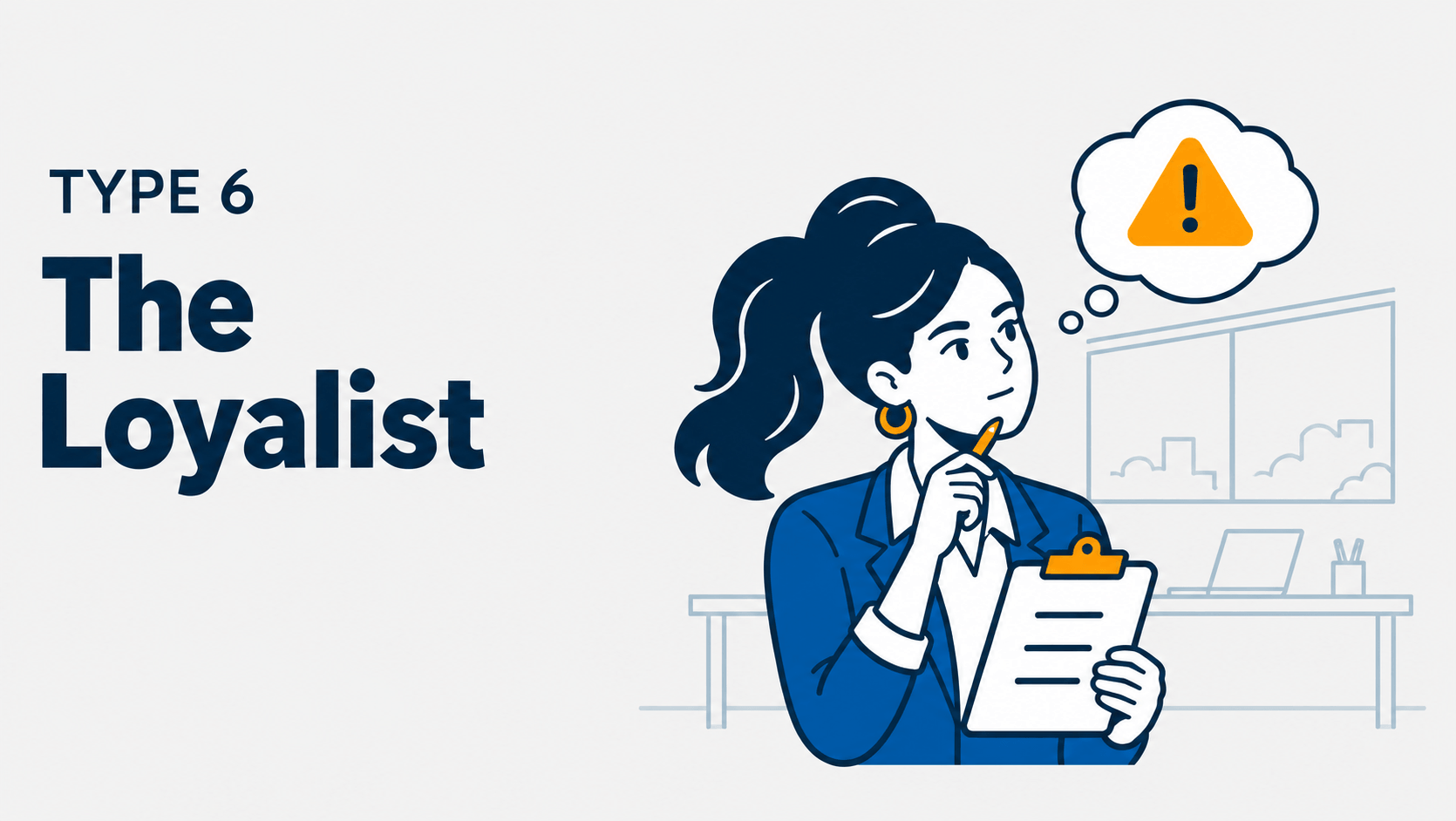
You might lead with Type 6 if: Your coach says, “Trust yourself.” You wonder whether that’s really the best approach.
Motivation: To feel secure and supported.
Fear: Of being without support or guidance.
Where they get stuck in business: Sixes have a wonderful ability to anticipate potential problems, which makes them great at identifying the weak point in plans. They come to client meetings and sales calls prepared and are real team players. However, their anxiety can hold them back:
Anticipating the worst case scenario. There’s so much uncertainty in business. This can really test a Six’s desire for security. Even good opportunities look like a list of potential disasters when you are waiting for the floor to fall out. May self-soothe with alcohol and other substances.
Seeking re-assurance outside of themselves. Entrepreneurs, especially early on, need an irrational belief in their ability to succeed. It’s hard to make bold decisions if you’re constantly doubting yourself and there’s no guarantee of success. Outside perspectives often add to their confusion.
Complacency in a secure business. It’s scary to make a change when your business is working. Letting go of a proven offer, changing contractors, going upmarket, etc. You can always quantify what you’ll lose; it’s harder to quantify what you might gain. Sometimes the riskiest thing you can do is stay in your comfort zone too long.
How to grow your business as a Type 6:
Carve out dedicated “worry time.” This is a CBT technique where, any time a worry comes to mind, you write it down. Then you dedicate 10-30 minutes a day to think through all your worries at once: imagine the worst case scenario, and take action or let it go. This gives you increased awareness of your own anxiety and permission to let reccuring thoughts go in the moment.
Practice trusting yourself. Before seeking outside perspectives, write down what you want to do and your reasoning for it. When hiring a coach, look for someone who can help you trust your inner wisdom instead of just giving you their personal playbook. Confidence comes from making your own decisions.
Reduce the risk by starting small. Test a new price with your next prospect. Offer something to a small group of past clients to see how it feels. Ask yourself, “What is the smallest next step I could take to get more information and move things forward?” It’s okay to be anxious - just remember that if you you go one step at a time, it’s unlikely that everything will fall apart.
Type 7: The Enthusiast

You might lead with Type 7 if: You finish a session with your coach by saying, “Just one more thing” and proceed to introduce an entirely new business.
Motivation: To feel satisfied and free to enjoy life.
Fear: Of being deprived, trapped, or unable to meet their needs.
Where they get stuck in business: Sevens are willing to experiment and they bring a contagious enthusiasm to everything they do. They are “idea people” who can produce creative new offers and marketing. However, their desire for novelty means that:
Starting feels more exciting than following through. Sevens love possibility, and sometimes they juggle too many different projects (and businesses) at once. Just when things start working in one area, it begins to feel boring, and they shift their focus. It’s fun to launch new things, but the real money comes from repeating what works long enough to scale it up.
Commitment can feel threatening. Sevens don’t like to have limits imposed on them, so they keep their options open. They value spontaneity and open-ended projects. Options become a type of insurance against feeling stuck. They may hesitate to “go all in” on a partnership, offer, or business model.
They avoid painful emotions. It’s one thing to have a positive attitude - that’s no problem for Sevens. But they have trouble sitting with disappointment. As a result, it’s hard for them to stay present. Reccuring problems in the business go unresolved and negative feedback is rationalized.
How to grow your business as a Type 7:
The grass isn’t always greener. From afar, other projects and business models look promising. But once you get closer, you start to notice the hard parts that weren’t visible before. Be realistic about what new opportunities will involve. Maybe they really are promising, or maybe they’re just a tempting distraction.
Create a waitlist for your ideas. Just as Sixes benefit from having a dedicated time to worry, Sevens need a time to revisit their ideas each quarter and decide what to commit to. Before pulling the trigger on a new idea, ask yourself “What am I willing to say No to in order to say Yes to this?” A coach can help you be more ruthless about prioritizing so you don’t get spread thin.
Face painful emotions head on. See how long you can stay with your disappointment when something doesn’t work out. You’re not going to sink into a black hole and die. This allows you to be intentional instead of reactive with your business, relationships, and initiatives. It also allows you to stick with one thing long enough to reap the rewards.
Type 8: The Challenger
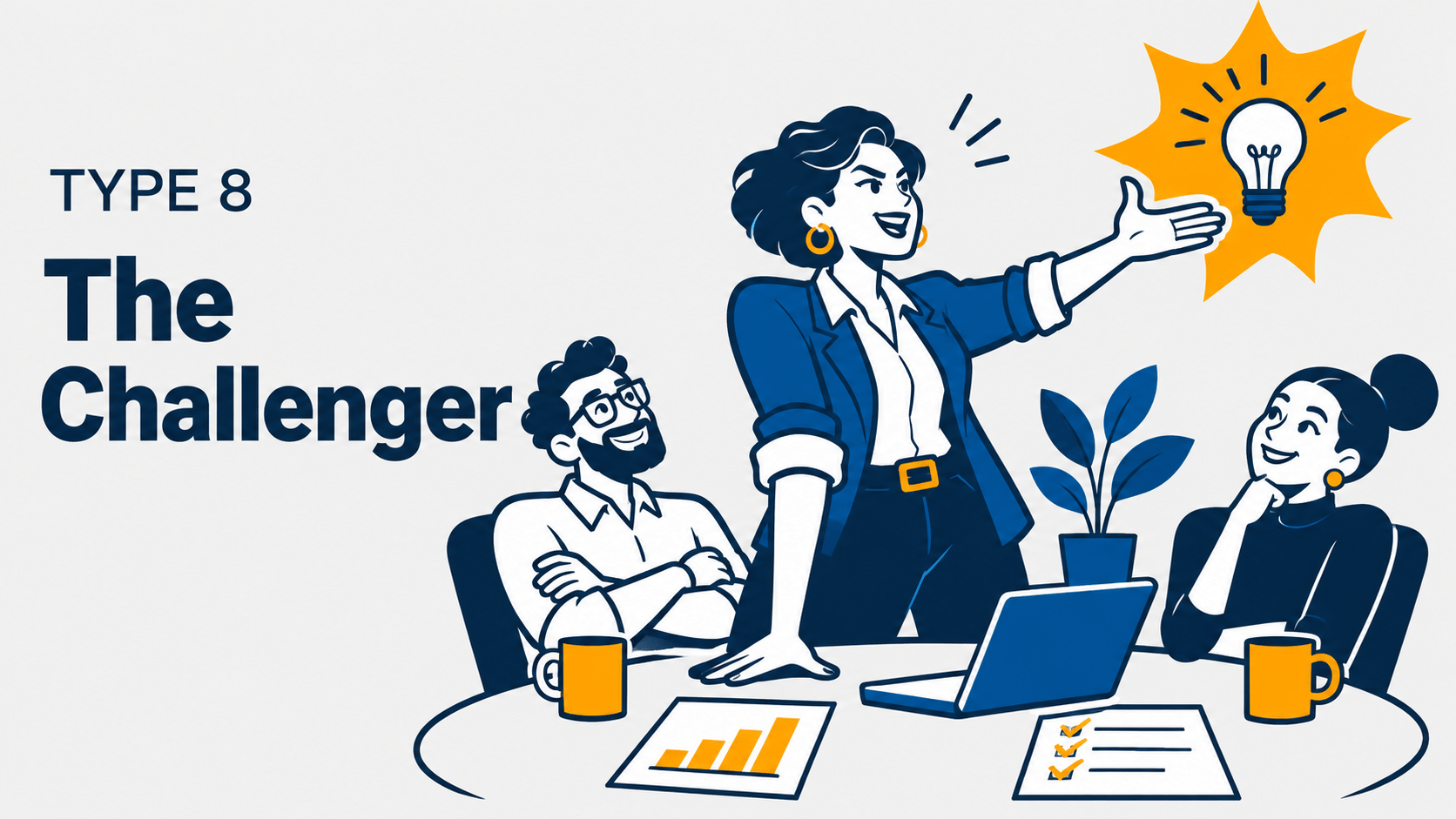
You might lead with Type 8 if: You hire a coach to hold you accountable. By session two, you’re holding them accountable.
Motivation: To protect themselves and be in control of their own life.
Fear: Of being harmed or controlled by others.
Where they get stuck in business: Eights can make decisions, have difficult conversations, and lead with confidence. They hate to be controlled, which makes them a natural fit for entrepreneurship. However:
They can intimidate people. Eights appreciate directness. In fact, they sometimes feel more connected during conflict. What feels like a lively discussion to them can feel like an interrogation to someone else. Eventually, people stop telling the truth because they don’t want an argument.
“My way or the highway.” Eights like to feel in control, and view compromise as a sign of weakness. As a result, they can act out of anger and do real damage to their relationships. Convinced that they are fighting for justice, they struggle to listen to others and integrate new perspectives.
Pushing through things that deserve attention. Eights can handle a great deal of exhaustion, emotional pain, and uncertainty. Slowing down can feel like admitting defeat. If they ignore their personal limits for too long, they’ll end up burning out or getting physically sick.
How to grow your business as a Type 8:
Make it easier for people to tell you the truth. Ask for feedback, then listen without immediately explaining why the other person is wrong or getting defensive. Thank them for their feedback. You may prefer testing people to see if they are reliable, but this is not how everyone builds trust.
Know when to yield. When you notice yourself wanting to take control, pause. Consider that the other person is not trying to manipulate or control you. In fact, they may have a better way of doing things. If someone has demonstrated competency, let them own the result and get out of their way.
Let someone see beneath the armor. Tell your coach that you’re scared, admit to your team that you made the wrong call, or ask your partner for support. Being honest about what you need gives other people a chance to help. Because of your strong facade, other people might not that realize you’re hurt.
Type 9: The Peacemaker
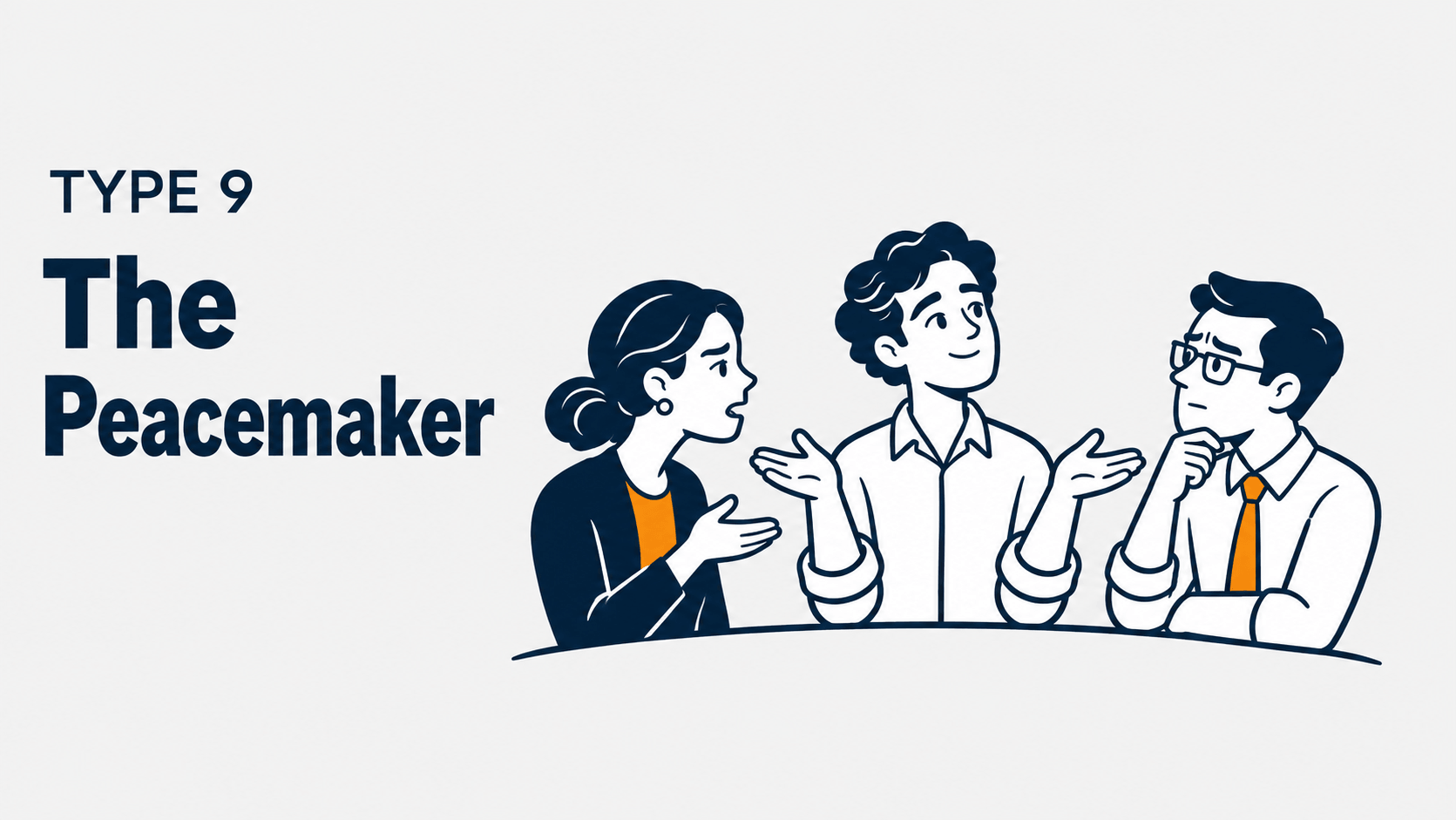
You might lead with Type 9 if: Your sales page ends with, “But you know yourself best.”
Motivation: To feel at peace and connected to others.
Fear: Of loss, separation, or disconnection.
Where they get stuck in business: Nines help people feel comfortable and understood. They see different perspectives, bring steadiness to stressful situations, and create space for clients to be heard. But keeping the peace can lead to inertia:
Struggling to take a position. Nines tend to merge with other people. They can hold multiple view points at once, which makes them good mediators. But if they can’t recognize their own perspective, they may end up delaying decisions or building a business around other people’s preferences.
Avoiding conflict can create more of it. Nines may say Yes to something they don’t want to do in order to preserve harmony, then resist following through. Or they may bite their tongue when a client repeatedly pays late, and end up frustrated and resentful. These attempts at keeping the peace just kick the can down the road and ultimately result in greater tension.
Staying busy instead of doing what matters most. Nines can end up spending the whole day answering emails and taking care of small tasks. Familiar work provides a sense of comfort, which can lead Nines to “sleepwalk” through their days while revenue generating activities get postponed.
How to grow your business as a Type 9:
Practice having a preference. Before asking what everyone else wants, pause and ask yourself: “What do I want?” If you go along with someone else’s agenda, and it doesn’t work out, you’ll be tempted to blame them. It may help to reverse the question and ask “What don’t I want?” Then do the opposite.
Address issues while they’re still small. A little discomfort now can prevent conflict later. For example, asking a client to pay their outstanding invoice before delivering more services. If you feel passive aggressive but don’t know why, you may need to express your preferences or boundaries more clearly.
Put your priorities on the calendar. Choose one action that would move your business forward and do it in the morning, before getting absorbed in everyone else’s requests. Be specific. For example, “Send the proposal by 10 a.m.” instead of “Work on sales.” A coach can help you make a game plan and follow through.
You Are Not Your Type
When you first learn your Enneagram type, it can be tempting to latch onto it as part of your identity. Don’t do that.
Instead, think of your type as a defensive strategy - a suit of armor you learned to wear as you grew up.
The point of learning your type is to recognize the unconscious patterns you get stuck in so that they don’t run your business for you.
On a related note, be careful about typing other people. The Enneagram focuses on why we do things, so it’s not enough to just observe what someone does.
If all you take from the Enneagram is that each person sees the world in a totally different and valid way, that alone will make you a better entrepreneur.
Further Resources
There’s a lot more to the Enneagram than just the 9 types.
For example, there are 3 instinctual variants of each type, making 27 subtypes. This helps explain why two people of the same type can look very different, or why you might not resonate with the classic description for your type.
If you want to go deeper, here are some resources I recommend:
Beatrice Chestnut on Subtypes (Article)
The Buddhist Enneagram (Book)
The Wisdom of the Enneagram (Book)
Atlas: The Enneagram (Music)
